

 Current position > News detail
『Pyrolysis Oil Flow Meter Corrosive Medium Hardening Steps』Related information(flow rotameter|digital flow meter|balo meter|hydraulic flow meter|volumetric meter|positive displacement meter|pitot tube flow meter|displacement meter|cfm meter|variable area flow meter|inline flow meter|differential pressure flow meter|calibrated flow meter|velocity meter|paddle wheel flow meter|oval gear flow meter|anemometer hvac|multiphase flow meter|doppler flow meter|thorpe tube flowmeter|heat flow meter)
Pyrolysis Oil Flow Meter: Dealing with Corrosive Media and Hardening Steps
Quick Answer: Pyrolysis oil hardens inside flow meters because it carries tar, char fines, and acidic water. The most reliable fix is to install a Coriolis mass flow meter with Hastelloy C22 wetted parts and a steam‑jacketed or electrically traced housing. Keep the oil temperature above 80 °C and flush the meter with hot light cycle oil after every batch.
We get calls about this problem almost every month. A plastic‑to‑fuel plant in Indonesia ran a turbine flow meter on pyrolysis oil. The rotor seized after six days. The waxy residue looked like coal paste. They had to chisel the internals out. That failure taught us a pattern. Pyrolysis oil is not a single fluid. It is a cocktail of cracked hydrocarbons, organic acids, and suspended carbon particles. The pH can sit at 2.5. Water content ranges from 15 to 30 percent. When the temperature drops below 60 °C, heavy fractions start to plate out on any surface that is colder than the fluid. Flow meters with dead legs, narrow passages, or bluff bodies accelerate that hardening.
Most engineers skip the fluid characterisation step. Here is the thing. You need a laboratory report with kinematic viscosity at 40 °C and 80 °C, total acid number, ash content, and water content. Without those numbers you are guessing. A customer in Thailand shipped us a 500 ml sample. The viscosity at 40 °C was 38 cSt. That ruled out any positive displacement meter with tight clearances. The ash content was 0.12 percent by mass. That told us solid particles would grind internal gears quickly. We recommended a Coriolis mass flow meter, DN20, with a smooth single‑tube design. The tube material was Hastelloy C22 because the acid number was 7.2 mg KOH/g. The electronics head was remote‑mount to keep the transmitter away from radiant heat coming off the reactor outlet.
Hardening happens in two ways. First, thermal cracking produces reactive molecules that polymerise when they hit a cool metal surface. Second, water‑soluble salts and organic acids form sticky gums. So the meter body must stay hotter than the fluid at all times. A steam jacket that wraps 90 % of the meter body works well on a 10 bar saturated steam supply. For smaller skids an electric trace with a PT100 sensor and a PID controller keeps the tube wall at 120 °C. Do not use a simple on‑off thermostat. The temperature ripple of 5 °C is enough to create cold spots where the heaviest compounds solidify. In practice, we set the heat tracing to maintain 15 °C above the fluid temperature measured at the upstream spool piece.
Installation geometry matters more than the meter type. Avoid a bottom‑mounted drain port that becomes a dead leg. Install the meter in a straight vertical pipe run with flow going upward. This keeps solids in suspension and lets gas bubbles escape. Include a bypass line with isolation valves. After every production run, close the meter, open the bypass, and flush the meter from below with hot light cycle oil or diesel cut at 150 °C. A small gear pump on the
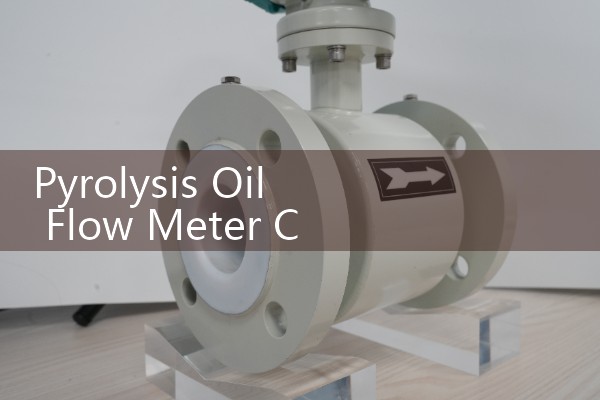
Do not try to measure pyrolysis oil with a magnetic flow meter. The organic phase has conductivity below 1 µS/cm. The meter will read zero. Vortex meters choke because the shedder bar acts like a filter basket for char particles. A customer in Mexico tried an oval gear meter with PEEK gears. The gears expanded at 120 °C and locked up. Positive displacement meters need a lubricating film between moving parts. Pyrolysis oil has no lubricity. The metal‑to‑metal friction generates heat and accelerates wear. Silver Automation Instruments supplies Coriolis meters that have zero internal moving parts. The tube vibrates at its natural frequency, and the phase shift gives mass flow directly in kg/h. No need to compensate for density changes, which swing a lot on pyrolysis oil batches.
Frequently Asked Questions
Why does pyrolysis oil harden in the flow meter?
Cool surfaces trigger polymerisation of reactive olefins and cause heavy waxes, asphaltenes, and inorganic salts to deposit. Keeping the meter body 15 °C hotter than the fluid stops the thermal shock that starts the hardening chain reaction.
Which flow meter technology handles both corrosion and hardening?
A straight‑tube Coriolis mass flow meter with Hastelloy C22 or Alloy 625 wetted parts, full‑bore design, and an integrated heating jacket. This technology has no flow‑obstructing parts, no bearings, and handles corrosion from organic acids.
What temperature setpoint prevents hardening?
The meter wall must stay above 80 °C for typical tyre pyrolysis oil, and above 100 °C for plastic pyrolysis oil with high polystyrene content. Use a PT100 sensor and a PID‑controlled heat trace to maintain a stable setpoint without cold spots.
Can I flush the meter in place?
Yes. Install a flush port at the low‑point block flange and pump hot light cycle oil at 150 °C through the meter for two minutes. Follow with a nitrogen purge to remove oxygen and residual vapours. A small‑skid pump and a 50‑micron filter make the flush repeatable and safe.
What information should I send for a quote?
Send us your fluid inlet temperature, the lowest ambient temperature on site, pipe size, expected flow range in kg/h, and the acid number from your laboratory analysis. We will select the right meter diameter and heating method for your pyrolysis oil application.
Send us your pressure (bar), temperature (°C), pipe size (DN), and flow range. We reply with a technical proposal, a dimensional drawing, and a price within one working day. Write to [email protected] or open a live chat on flow-meter.com.au.