

『Differential Flow Meter Working Principle: Primary Element Friction Drop Mathematics』Related information(flow rotameter|digital flow meter|balo meter|hydraulic flow meter|volumetric meter|positive displacement meter|pitot tube flow meter|displacement meter|cfm meter|variable area flow meter|inline flow meter|differential pressure flow meter|calibrated flow meter|velocity meter|paddle wheel flow meter|oval gear flow meter|anemometer hvac|multiphase flow meter|doppler flow meter|thorpe tube flowmeter|heat flow meter)

Differential Flow Meter Working Principle: Primary Element Friction Drop Mathematics
Quick Answer: A differential flow meter uses a primary element to create a local pressure drop. The measured differential pressure relates to flow rate through a square root equation. Friction drop mathematics tells you how much pressure the process loses permanently, which matters for pump and compressor sizing.
How a Primary Element Creates Differential Pressure
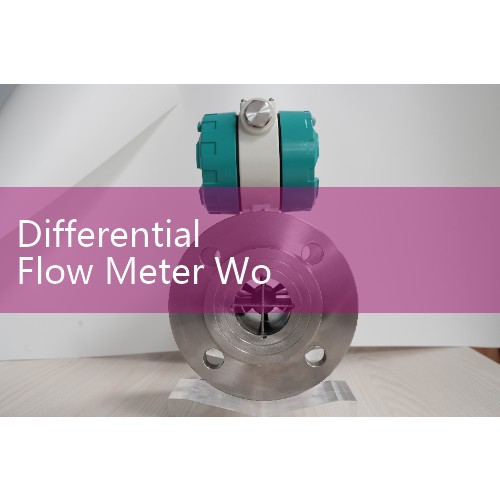
A differential flow meter is one of the oldest and most widely used flow measurement methods in oil and gas, water, steam, and chemical plants. The primary element is installed in the pipe. The element can be an orifice plate, a Venturi tube, a flow nozzle, or a wedge. Each type restricts the flow area. Velocity increases at the restriction. Static pressure drops. Downstream the pressure recovers partly but not completely.
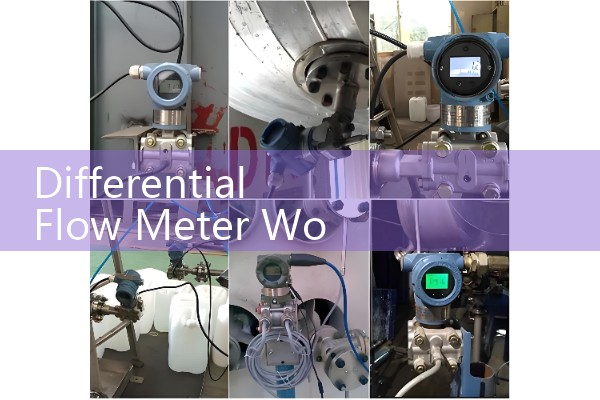
This pressure difference is called differential pressure or DP. A DP transmitter measures the high side and the low side. The transmitter sends a 4-20 mA HART signal to a flow computer, PLC, or panel meter. The flow rate is not linear. It follows a square root function. Most transmitters have a built in square root extraction. Some engineers prefer to do the square root in the control system.
Friction Drop Mathematics and Permanent Pressure Loss
Here is the thing. The fluid loses energy because of friction and turbulence at the restriction. The total DP has two parts. One part is recoverable. The other part is permanent pressure loss. Engineers call this friction drop or residual pressure loss. Permanent pressure loss means the downstream pressure never returns to the upstream value. That lost energy costs money because pumps and compressors must work harder.
The basic flow equation for a differential flow meter is Q equals C times epsilon times the pipe area times the square root of two times delta P divided by density. In this equation C is the discharge coefficient. Epsilon is the expansion factor for gas and steam. Delta P is the measured differential pressure. Density is at flowing conditions. The discharge coefficient changes with Reynolds number, beta ratio, and primary element type.
Most engineers skip the full derivation. The practical point is that a higher beta ratio means a smaller DP for a given flow. A lower beta ratio creates a larger DP but also more permanent pressure loss. For example, an orifice plate with beta ratio 0.7 in a DN100 water line at 80 m3/h might produce 25 kPa differential pressure. Permanent loss could be 15 kPa. A Venturi tube under the same flow may produce 18 kPa DP with only 3 kPa permanent loss.
Typical Numbers for Orifice Plate, Venturi, and Nozzle
Orifice plates are the cheapest primary element. They are easy to replace. But they have the highest permanent pressure loss, often 40% to 80% of the DP. A Venturi tube costs more and needs more straight pipe length. Permanent loss is only 10% to 20% of the DP. A flow nozzle sits in between. For high velocity steam, a flow nozzle handles erosion better than an orifice plate.
We have seen this on customer sites many times. A natural gas distribution station in Australia replaced an orifice plate with a Venturi beca
Sizing Data You Need Before You Ask for a Quote
If you send an inquiry to Silver Automation Instruments, include these details. Fluid name, flow range in kg/h or m3/h, operating pressure in bar, operating temperature in °C, pipe size DN, pipe schedule, required accuracy, and output signal. State if you need a local display or HART protocol. For gas or steam, include molecular weight or density. For liquid, include viscosity in cP if possible.
Typical transmitters from Silver Instruments support 4-20 mA HART, Modbus RTU, and pulse output. We supply ATEX Zone 1 approvals for gas and chemical plants. The primary element can be 316L stainless steel, Hastelloy, or PTFE lined for corrosive fluids. For seawater desalination plants, duplex or super duplex material is common.
Applications Where Differential Flow Meters Fit
Differential flow meters are common in oil and gas, water and wastewater, steam boiler houses, chemical processing, food and beverage, and marine systems. A seawater flow meter for a desalination plant in Saudi Arabia can use a Venturi tube with a DP transmitter. A steam flow meter for a textile factory in Vietnam often uses an orifice plate with a smart DP transmitter. A biogas flow meter for a brewery in Mexico may use a wedge meter to handle dirty gas.
FAQ
Q: What is the main difference between orifice plate and Venturi friction drop?
A: An orifice plate loses 40% to 80% of the measured DP permanently. A Venturi tube loses only 10% to 20%. If pump or compressor energy cost is high, Venturi often wins despite higher purchase price.
Q: Can a differential flow meter measure gas and steam?
A: Yes. You need pressure and temperature compensation. The transmitter or flow computer uses density correction. For steam, use a flow nozzle or orifice plate with a condensate pot arrangement.
Q: How do I calculate flow from differential pressure?
A: Flow rate is proportional to the square root of differential pressure. You need the discharge coefficient, expansion factor, pipe diameter, beta ratio, and fluid density. Silver Instruments can provide a sizing sheet with your quote.
Q: What straight pipe length does a DP flow meter need?
A: Orifice plates often need 10D to 30D upstream depending on fittings. Venturi tubes need less, about 5D to 10D. If the pipe run is short, tell us before ordering. We may suggest a flow conditioner.
Q: What is the typical accuracy of a differential flow meter?
A: A properly sized orifice plate system gives plus or minus 1 percent to 1.5 percent of rate. A Venturi or flow nozzle can reach 0.5 percent to 1 percent. Calibration and correct installation matter more than the primary element type.
Contact Silver Automation Instruments for a differential flow meter quote. Send us your fluid, flow range, pipe size, pressure, and temperature. Tel: +86-25-68650347. Whatsapp: +86-25-52155837. WeChat: +86 15365082610.
 Hot Product
 Related AD