

『Flow Meter Operation Checklist: General Best Practices for Commissioning Industrial Transmitters』Related information(flow rotameter|digital flow meter|balo meter|hydraulic flow meter|volumetric meter|positive displacement meter|pitot tube flow meter|displacement meter|cfm meter|variable area flow meter|inline flow meter|differential pressure flow meter|calibrated flow meter|velocity meter|paddle wheel flow meter|oval gear flow meter|anemometer hvac|multiphase flow meter|doppler flow meter|thorpe tube flowmeter|heat flow meter)
Flow Meter Operation Checklist: General Best Practices for Commissioning Industrial Transmitters
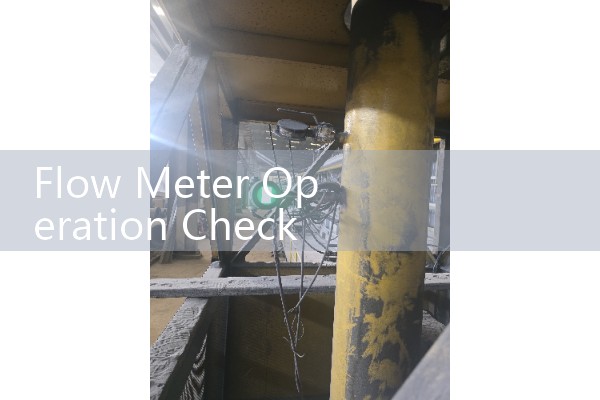
Quick Answer: Commissioning an industrial flow meter transmitter is a field task that follows a clear order. Verify wiring, grounding, zeroing, pipe settings, process limits, and 4-20 mA HART output before startup. This checklist avoids most reading errors on water, diesel, chemical, and gas lines.
1. Check the Transmitter Tag and Process Data
Before you apply power, match the transmitter tag against the plant P&ID. Confirm pipe size, liner material, electrode type, and process fluid. A DN50 electromagnetic flow meter for clean water is not the same as a DN25 unit for acid. Silver Instruments ships each flow meter with a calibration certificate. Match the serial number on the certificate to the tag on the transmitter. We have seen a paint manufacturer in Southeast Asia install a DN80 meter on a DN65 line. The flow readings were 12 percent high until the pipe diameter setting was corrected.
2. Check Wiring and Grounding Before Power-Up
Use the wiring diagram inside the terminal cover. Check 24 V DC supply polarity. Check the 4-20 mA HART loop resistance. For electromagnetic flow meters, grounding is critical. Use the ground ring or grounding electrode. Run a separate ground wire from the flow sensor to the plant earth bar. Do not share a ground path with variable frequency drives. The process fluid needs at least 5 µS/cm conductivity for stable readings. Our service team has seen noisy signals on wastewater pumps where VFD grounding caused a 1.5 percent error.
3. Match the Transmitter Settings to the Sensor
Set the flow meter K-factor, pipe diameter, excitation, and damping. For vortex and turbine meters, enter the K-factor from the calibration sheet. For Coriolis meters, confirm the density calibration factor. For oval gear flow meters, set the pulse unit per liter. For ultrasonic flow meters, confirm transducer spacing and pipe wall thickness. Most engineers skip this part on small jobs. But a wrong K-factor turns a good sensor into a random number generator.
4. Zero the Transmitter Under No-Flow Conditions
Fill the pipe with process fluid. Stop flow completely. Close the downstream valve and vent air. Wait for the temperature to stabilize. Then start the zero function on the transmitter. Do not zero an empty pipe. For gas thermal mass flow meters, purge the line with the same gas at operating pressure. We have seen this on customer sites many times. A Coriolis meter zeroed with air bubbles will drift in liquid service.
5. Verify Process Temperature and Pressure Limits
Check the transmitter limits against your process. Standard electromagnetic flow meters handle fluid temperatures up to 120 °C with PTFE liner. For steam or hot oil, use a vortex flow meter with a high temperature sensor. Pressure ratings for wafer meters often stop at PN16. For high pressure gas, confirm PN40 or ANSI 300. For hazardous areas, confirm ATEX Zone 1 or Zone 2 certification before you open the terminal cover. For high viscosity oil above 100 cP, choose an oval gear meter instea
6. Confirm Output Scaling and Units
Set the 4-20 mA output to match the control system. If the DCS expects 0 to 100 m3/h, set the transmitter to 4 mA at 0 m3/h and 20 mA at 100 m3/h. Check HART variables for flow, total, density, and temperature. On Silver Instruments Coriolis transmitters, you can read mass flow in kg/h and density in kg/m3 on the same loop. On Coriolis mass flow meters, the PT100 input affects density and mass flow. Set the pulse output for totalizer increments, not random values.
7. Run a Field Check with a Reference Signal
If possible, simulate a known flow. For a DN15 water line, a bucket and stopwatch is enough. For air, compare with a portable thermal mass meter. A customer in Vietnam asked us last year why his oval gear meter read 6 percent low on diesel. We found the pulse scaler was set to 1 pulse per 2 liters instead of 1 pulse per liter. A quick field check saved a return shipment.
8. Record Commissioning Data
Write down the process fluid, operating flow range, temperature, pressure, pipe size, liner, calibration factor, zero value, output test result, and technician name. This record helps when support calls come months later. It also helps your team compare baseline values after maintenance.
9. Common Commissioning Mistakes
Here is the thing. Three causes repeat across startup failures. Poor grounding on electromagnetic meters. Zeroing an empty or partially filled pipe. Entering the wrong K-factor or pipe diameter. These are simple checks. Yet they cause most field returns. Check them before you call the vendor.
10. When to Call Silver Instruments
If the transmitter still reads wrong after these checks, gather your process data. Send us your pressure in bar, temperature in °C, pipe size in DN, and flow range. We respond with a setting change or a replacement recommendation. Contact Silver Instruments at Tel: +86-25-68650347, Whatsapp: +86-25-52155837, WeChat: +86 15365082610. We typically reply with a quote or setting list within one working day.
Frequently Asked Questions
Can I zero an electromagnetic flow meter on an empty pipe? No. Fill the pipe and stop flow. Air bubbles between electrodes cause unstable zero.
What grounding method works best for electromagnetic flow meters? Use a dedicated ground wire from the sensor to plant earth. If the pipe is non-conductive, use grounding rings.
How do I set the pulse output on an oval gear flow meter? Divide the desired unit volume by the meter K-factor in pulses per liter. Enter that value into the pulse scaler.
What should I check if a Coriolis meter reads density wrong? Check the temperature input. Check for two phase flow. Then run the air and water calibration from the transmitter menu.
Do I need to re-zero a vortex flow meter after installation? Not always. Vortex meters measure frequency and do not need zeroing. But you must check the K-factor and pipe vibration.
 Hot Blog
 Related AD