

『DIY Ultrasonic Water Flow Meter: Prototyping External Pipe Acoustic Monitors』Related information(flow rotameter|digital flow meter|balo meter|hydraulic flow meter|volumetric meter|positive displacement meter|pitot tube flow meter|displacement meter|cfm meter|variable area flow meter|inline flow meter|differential pressure flow meter|calibrated flow meter|velocity meter|paddle wheel flow meter|oval gear flow meter|anemometer hvac|multiphase flow meter|doppler flow meter|thorpe tube flowmeter|heat flow meter)
DIY Ultrasonic Water Flow Meter: Prototyping External Pipe Acoustic Monitors for Industrial Use
Quick Answer: A DIY ultrasonic water flow meter using external pipe acoustic monitors rarely holds up in industrial service. For stable readings on DN15 to DN6000 lines, a clamp-on ultrasonic flow meter from Silver Instruments works without cutting pipe or stopping flow. Send us pipe size, fluid type, temperature, and flow range for a price quote.
Why DIY Acoustic Prototypes Look Easy on Paper
You strap a piezo sensor to a pipe. You read the time of flight. You code an Arduino. Then you see a number. This is the typical DIY ultrasonic water flow meter path. In a clean lab on a DN25 PVC pipe with calm water, it can work. Many makers and service engineers start this way. They want a low cost external pipe acoustic monitor for quick checks.
Here is the thing. Field pipes are not clean. They vibrate. Pumps start and stop. Pipe walls carry noise from motors, valves, and nearby equipment. External pipe acoustic monitors pick up all of that. A simple threshold detector cannot separate flow signal from a compressor starting 20 meters away.
External Pipe Acoustic Monitors vs Industrial Clamp-On Flow Meters
Industrial clamp-on ultrasonic flow meters do not just measure time of flight. They sample hundreds of times per second. They use digital signal processing to reject noise. They compensate for temperature, pipe material, wall thickness, and fluid density. The transmitter can accept a PT100 input for temperature compensation. Silver Instruments supplies clamp-on ultrasonic flow meters with outputs such as 4-20 mA HART, RS485 Modbus, and pulse. Typical accuracy is 1 percent of reading or better on pipes from DN15 to DN6000.
Most engineers skip this part on a DIY prototype. But signal coupling is the biggest problem. A loose zip tie or a dry transducer face gives unstable readings. Industrial meters use matched transducer pairs and coupling gel. The transmitter verifies the received signal before it shows a flow value. This is why a DIY acoustic monitor may show 20 percent error on a DN100 steel pipe with scale.
When a DIY Monitor Is Useful
A DIY ultrasonic water flow meter can be a training tool. It works for short tests on clean plastic pipes with stable flow. It is not a billing meter. It is not a control input for a chemical dosing pump. We have seen this on customer sites many times. A site engineer builds a prototype to avoid buying a flow meter. Then they spend three days chasing signal drift.
If you need a portable spot check meter, Silver Instruments offers a handheld clamp-on ultrasonic flow meter. It stores data and can run on battery. But for continuous monitoring on seawater, wastewater, or chilled water lines, use a fixed clamp-on meter.
A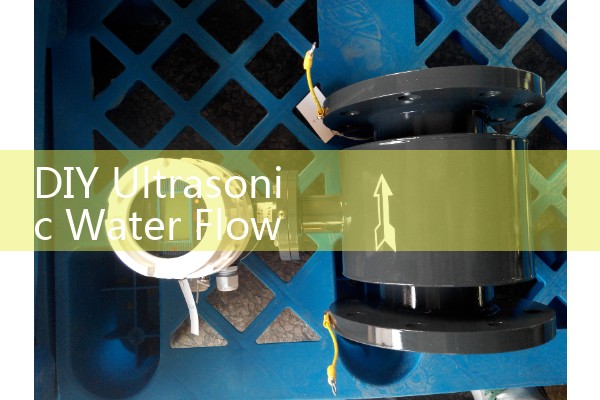
Last year a customer in Vietnam asked us about a DIY acoustic monitor on a DN200 seawater line. The pipe was GRP with a thick wall. The fluid temperature ranged from 22 to 31 °C. The seawater conductivity was around 50,000 µS/cm. The prototype gave good numbers for 10 minutes. Then the readings drifted by 12 percent after a high pressure pump kicked in. Vibration from the pump saturated the sensor.
We recommended a Silver Instruments clamp-on ultrasonic flow meter with stainless steel transducers and 4-20 mA HART output. The meter was installed without cutting pipe. It has been running for 9 months with less than 1.5 percent deviation from the plant flow balance. This is a seawater flow meter for desalination plant duty. The key was not a better sensor alone. It was the transmitter signal processing and proper coupling.
What You Need Before You Request a Quote
Send us your pressure in bar, temperature in °C, pipe size in DN, pipe material, and flow range in m3/h. Also tell us the fluid. For wastewater or seawater, use a meter with rated transducers. For hazardous areas, specify ATEX Zone 1 or Zone 2. Silver Instruments can supply ultrasonic flow meter price information within 24 hours for most standard requests.
Contact Silver Automation Instruments by Tel: +86-25-68650347. You can also reach us on WhatsApp: +86-25-52155837 or WeChat: +86 15365082610.
FAQ: DIY Ultrasonic Water Flow Meter Prototyping
Can a DIY ultrasonic flow meter replace an industrial meter? No. A DIY prototype is fine for learning. It does not have certified accuracy, signal isolation, or long term stability for industrial use.
What is the minimum pipe size for a clamp-on ultrasonic flow meter? Silver Instruments offers transducers for DN15 and larger. Smaller pipes can work with special mounting rails but accuracy drops.
Does the fluid need to be clean? It should have low solids or gas bubbles. For wastewater with high solids, a Doppler ultrasonic flow meter may work better.
Can I use a DIY acoustic monitor on a metal pipe? You can try. But steel and copper pipes have high acoustic impedance. You need proper coupling gel and a strong transmitter pulse. Industrial meters handle this automatically.
How much does a clamp-on ultrasonic water flow meter cost? Price depends on pipe size, transducer type, and output options. Send us your pipe size, fluid, temperature, and flow range for a specific quote.
Silver Automation Instruments serves industrial users in Southeast Asia, Oceania, Latin America, Africa, and the Middle East. For ultrasonic water flow meter price and delivery, call Tel: +86-25-68650347 or WhatsApp: +86-25-52155837.
 Hot Blog
 Related AD