

 Current position > Product detail
『Oil Flow Meter for Pipeline Monitoring: Real-Time Flow Dynamics and Leak Detection』Related information(flow rotameter|digital flow meter|balo meter|hydraulic flow meter|volumetric meter|positive displacement meter|pitot tube flow meter|displacement meter|cfm meter|variable area flow meter|inline flow meter|differential pressure flow meter|calibrated flow meter|velocity meter|paddle wheel flow meter|oval gear flow meter|anemometer hvac|multiphase flow meter|doppler flow meter|thorpe tube flowmeter|heat flow meter)
Oil Flow Meter for Pipeline Monitoring: Real-Time Flow Dynamics and Leak Detection
Quick Answer: For oil pipeline monitoring that demands real-time flow dynamics and fast leak detection, a Coriolis mass flow meter or a clamp-on ultrasonic flow meter gives you the most actionable data. Coriolis meters capture both mass flow and live density changes, while clamp-on ultrasonic units let you retrofit monitoring without cutting pipe or stopping production.
Why Real-Time Flow Dynamics Matter on Oil Pipelines
Oil pipelines run 24 hours a day across long distances in Indonesia, Nigeria, Saudi Arabia, and coastal Australia. A small leak, maybe 0.5 litre per minute, might not trip a pressure switch for hours. By the time operations see the pressure drop, product worth thousands of dollars is already in the ground or water. Real-time flow dynamics fill that gap.
Engineers want more than just a flow total. They need mass flow, density, temperature, and fluid velocity updated every second. With that stream of data, a SCADA or DCS system can compare inlet and outlet flows on a 15 km pipeline and detect a mismatch within seconds. We have seen this approach catch leaks smaller than 1 percent of total flow on a crude oil transfer line in Vietnam.
Leak Detection with Coriolis Mass Flow Meters
A Coriolis meter measures mass flow directly, not inferred from volume. This makes it ideal for oil where density changes with temperature and grade. But the real value for leak detection is the meter ability to output live density and drive gain. Many engineers skip this part. In practice, a drop in density of just 2 kg/m³ on a diesel line often means air ingestion or a pinhole leak that let seawater into a subsea pipe.
Silver Instruments supplies the SICM Series Coriolis mass flow meter in sizes from DN3 to DN150. Standard accuracy is ±0.1 percent for mass flow and ±0.5 kg/m³ for density. The meter outputs 4-20 mA HART, Modbus RTU, and a frequency signal. You can pull mass flow and density into a PLC every 100 ms and set deviation alarms. For ATEX Zone 1 or IECEx environments, we supply the meter with stainless steel 316L wetted parts and a flameproof transmitter housing.
Last year a customer in Malaysia requested a palm oil transfer monitoring system. They had a DN80 pipeline, temperature 80 degrees Celsius, pressure 10 bar, and viscosity around 35 cP. We recommended the SICM Coriolis with an integral PT100 for density compensation. After startup, the team noticed a 0.3 percent density shift every Tuesday morning. That small signal led them to a loose flange that leaked only when the pipe expanded under full heat. Without real-time density, that leak would have run for months.
Clamp-On Ultrasonic Meters for Retrofit Monitoring
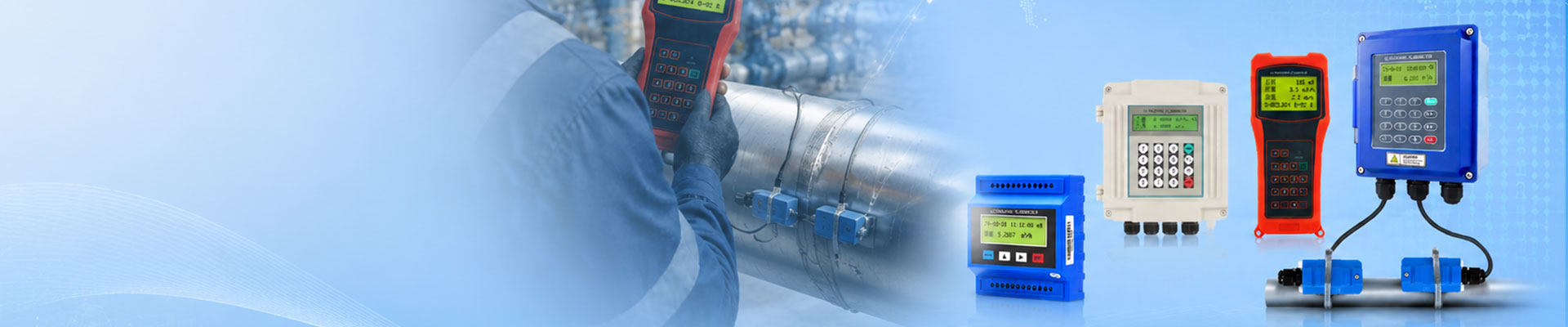
Many oil pipelines were built 20 years ago with no inline flow meter. Cutting the pipe for a spool piece costs downtime and welding permits. A clamp-on ultrasonic flow meter solves this. Silver Instruments SITRANS FUS series clamp-on meter fits pipe sizes from DN15 to DN6000. The transducers mount outside the pipe wall and measure transit time difference. For light oil, diesel, and kerosene, the meter provides ±0.5 percent of reading once correctly installed.
Here is the thing about clamp-on meters and leak detection. You install two sets on the same pipeline, one near the inlet and one near the outlet, and let the flow computer compare mass balance. Because the meters are non-intrusive, you can commission the system over a weekend without a shutdown. We have supplied this setup for a fuel terminal in Mozambique. They monitor a DN250 pipeline carrying diesel at 35 degrees Celsius and 12 bar. When the differential flow exceeds 0.8 percent, an alarms triggers in the control room.
Most engineer
Selecting the Right Meter for Your Oil Pipeline
No single meter fits every oil monitoring job. High viscosity oil above 100 cP can challenge ultrasonic transit time signals. For bunker fuel or heavy crude, an oval gear flow meter often delivers better repeatability. Silver Instruments oval gear meters cover 0.5 to 1000 cP without losing accuracy. They provide a pulse output proportional to volume, which teams can integrate into a PLC for batching and custody transfer checks.
For pipelines that carry both oil and water in intermittent slugs, a Coriolis meter gives you water-cut estimation from density. A vortex meter can handle higher temperatures up to 280 degrees Celsius for thermal oil, but it lacks the density signal. We help customers map the fluid properties first. Send us your oil type, normal operating viscosity in cP, temperature in degrees Celsius, pressure in bar, and pipe size in DN. That data lets us narrow the choice to one or two model lines.
Installation Tips for Harsh Environments
Offshore platforms in Australia or desert pipelines in the Middle East punish instruments with salt spray, sand, and wide temperature swings. Meters installed for leak detection must stay stable even when ambient temperature changes from 5 degrees Celsius at night to 55 degrees Celsius at noon.
For inline Coriolis meters, we recommend a sunshade and vibration isolation if the pipe runs aboveground. For clamp-on meters, use a coupling gel rated for the pipe surface temperature and replace it every 12 months. Silver Instruments field service partners in Southeast Asia can visit the site and check the signal strength during routine maintenance. A meter with a signal quality below 60 percent will drift and trigger false leak alarms.
FAQ
Can a flow meter detect a 1 litre per minute leak on a diesel pipeline?
Yes, with the right setup. A Coriolis meter in DN50 with a mass flow rate of 10 000 kg/h can resolve a leak as small as 0.8 kg/min when you compare inlet and outlet meters. The system must compensate for temperature expansion in the pipe inventory.
Do I need to stop the flow to install a clamp-on leak detection meter?
No. Clamp-on ultrasonic transducers install outside the pipe while the line runs at full pressure. You only need a short section of clean, straight pipe and proper surface preparation.
What output signals does Silver Instruments provide for pipeline monitoring?
Standard outputs are 4-20 mA HART, Modbus RTU over RS485, and a pulse or frequency output. You can pull flow, density, temperature, and diagnostic codes into any SCADA system.
Which oil flow meter works best for crude oil with 3 percent water content?
A Coriolis mass flow meter. It measures density simultaneously, and you can calculate the water fraction from the density shift. For heavier water cuts, pair it with a water-cut analyzer.
Does Silver Instruments offer ATEX certification for oil pipeline meters?
Yes. We supply meters certified for ATEX Zone 1 and IECEx for gas and dust. The transmitter housings are available in aluminium with epoxy coating or stainless steel 316L.
Send us your pressure in bar, temperature in degrees Celsius, pipe size in DN, and flow range. Tell us the oil type and whether you need inline or clamp-on installation. Our applications team will reply with a recommended model number, full datasheet, and a price indication within one working day.