

 Current position > Product detail
『DIY Magnetic Flow Meter: Building Custom Induction Fluid Sizers For Liquids』Related information(flow rotameter|digital flow meter|balo meter|hydraulic flow meter|volumetric meter|positive displacement meter|pitot tube flow meter|displacement meter|cfm meter|variable area flow meter|inline flow meter|differential pressure flow meter|calibrated flow meter|velocity meter|paddle wheel flow meter|oval gear flow meter|anemometer hvac|multiphase flow meter|doppler flow meter|thorpe tube flowmeter|heat flow meter)
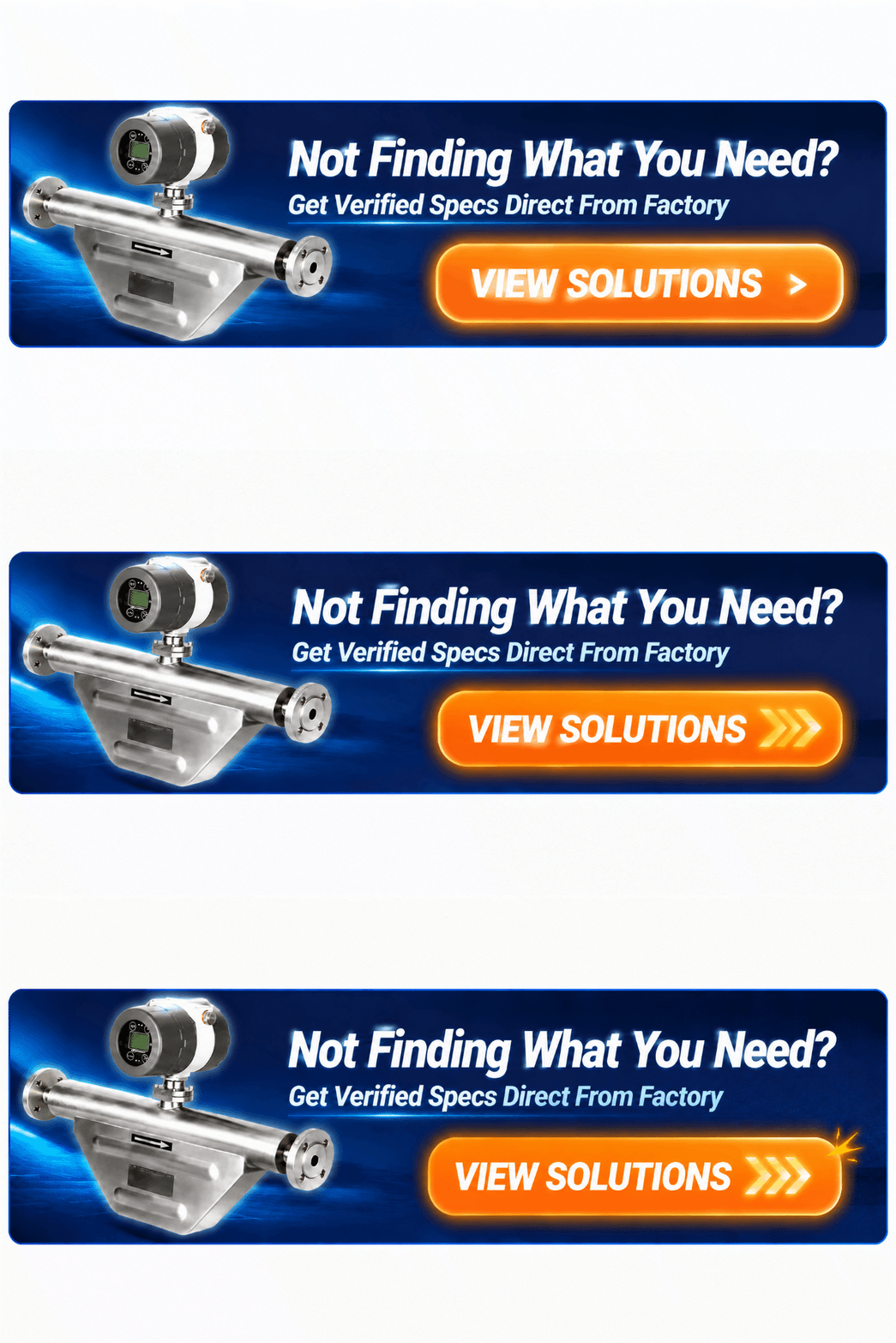
DIY Magnetic Flow Meter: Building Custom Induction Fluid Sizers For Liquids
Quick Answer
A DIY magnetic flow meter can work on a clean water test bench, but it rarely survives on an industrial line. You can build a small induction sensor for conductive liquids, yet calibration, liner sealing, grounding, and signal stability remain difficult. For process control, batching, or billing, Silver Automation Instruments recommends a factory calibrated electromagnetic flow meter sized for your exact pipe and liquid.
If you need a magmeter for wastewater, seawater, acid, or slurry, send us your pressure (bar), temperature (°C), pipe size (DN), flow range, and conductivity (µS/cm). We will quote a standard industrial meter instead of a lab rig.
What a DIY Magnetic Flow Meter Actually Measures
A magnetic flow meter follows Faraday law. A conductive liquid passes through a magnetic field generated by coils. Electrodes pick up the induced voltage. That voltage is proportional to flow velocity. The meter multiplies velocity by pipe cross section to get volumetric flow rate.
Most DIY induction fluid sizers use a short plastic or stainless spool, two coils, two electrodes, and a signal amplifier. The coil drive is often a low frequency square wave from a microcontroller. The electrodes feed into an instrumentation amplifier. In theory this is simple. In practice the signal is small and noisy.
Five Reasons Industrial Users Abandon DIY Induction Fluid Sizers
First, electrode sealing leaks. Water or acid pushes past the electrode O-ring and ruins the amplifier. Second, ground noise. Plastic pipes need grounding rings or a third electrode. Many DIY builders skip this step. Third, calibration drift. A homemade meter may read 10 percent high in the morning and 8 percent low after coil heating.
Fourth, low conductivity liquids produce weak signals. A commercial magmeter can handle 5 µS/cm or lower. A DIY front end often fails below 50 µS/cm. Fifth, empty pipe detection. Most homemade electronics do not detect an empty pipe. This causes false totals and pump errors.
We have seen this on customer sites many times. A dairy plant in Australia tested a DIY magmeter on a cream line. The meter worked for two weeks. Then temperature changed and the liner swelled. The result was a false reading and a long cleaning stop. A paint manufacturer in Southeast Asia had the same issue with a solvent line. The meter read zero because solvent is not conductive.
Key Parameters For Custom Induction Fluid Sizers
If you still want to build a test unit, use these numbers as a baseline. Choose a pipe size from DN15 to DN50. Keep flow velocity between 0.5 m/s and 10 m/s. Standard accuracy for commercial meters is 0.5 percent of reading. A DIY build may reach 2 to 5 percent on a good day.
Use 316L stainless steel electrodes for water and weak acid. Use Hastelloy C for seawater or chlorides. Use PTFE or PFA liner for aggressive chemicals. Use a coil drive from 3 Hz to 12 Hz. Shield the electrode cable. Add a grounding ring on both ends if your pipe is plastic.
Most engineers skip this part. Without proper grounding and shielding, the induced voltage disappears inside the noise floor. A 0.5 m/s flow on a DN25 pipe produces a very small signal. Signal levels are often below 1 mV. One bad ground connection creates more noise than the flow signal itself.
When a Commercial Magmeter Is the Better Choice
Buy a standard electromagnetic flow meter when the liquid is corrosive, the pipe is larger th
Our meters output 4-20 mA HART, pulse, or RS485 Modbus. Accuracy is 0.5 percent of reading for standard models. Optional 0.2 percent models are available for water custody transfer. For wastewater plants in Vietnam, Thailand, or the Philippines, we often recommend a remote type sensor with IP68 protection.
For a desalination plant in Saudi Arabia, we supplied a seawater flow meter for a high pressure brine line. The customer sent conductivity, pressure, and pipe size. We proposed a DN80 PTFE lined meter with titanium electrodes and 4-20 mA HART output.
Recommended Silver Instruments Electromagnetic Flow Meters
For clean water and wastewater, use the Silver Instruments SI-MAG series. Sizes run from DN10 to DN2000. Liner choices include hard rubber and PTFE. Output includes 4-20 mA, pulse, and RS485. Accuracy is 0.5 percent of reading.
For acids, alkalis, and brine, select a PTFE liner with Hastelloy C or tantalum electrodes. For food and beverage, choose a sanitary connection model with 316L electrodes and FDA approved liner. For marine ballast water, we provide DN25 to DN500 magmeters with compact or remote electronics.
Need a specific model? Send us your liquid type, flow range in m³/h, pressure in bar, temperature in °C, pipe size in DN, conductivity in µS/cm, and required output. We will return a quote with price, lead time, and freight to your country.
How To Request a Quote
Contact the Silver Automation Instruments sales team by telephone or WhatsApp. You can also visit flow-meter.com.au for technical data sheets. Tell us your application and operating conditions. A detailed quote usually takes less than 24 hours.
Tel: +86-25-68650347
Whatsapp: +86-25-52155837
WeChat: +86 15365082610
Send your process data to the sales team on WhatsApp or WeChat. A complete data set reduces the number of questions.
FAQ: 5 Key Questions
Can I build a DIY magnetic flow meter for diesel or oil? No. Magnetic flow meters only work with conductive liquids. Water based liquids, acids, slurries, and wastewater are suitable. Diesel and oil are non-conductive.
What is the minimum conductivity for a magnetic flow meter? Most commercial magmeters require at least 5 µS/cm. Some high performance models go down to 0.05 µS/cm. DIY sensors usually need higher conductivity because their signal front end is simple.
What pipe sizes do you cover? Silver Automation Instruments supplies electromagnetic flow meters from DN10 to DN3000. For micro flow rates, DN10 or DN15 is common. For large water mains, DN600 to DN3000 models are available.
Can a magmeter handle high pressure seawater? Yes. A PTFE liner with titanium electrodes works well in seawater and brine. Send your pressure in bar and temperature in °C. We will check the flange rating and liner limit.
How fast can I get a quote? Most customers receive a quotation within one business day. Send your liquid type, flow range, pipe size, pressure, temperature, and output signal. That data removes most back and forth emails.
Quick CTA: Send us your pressure (bar), temperature (°C), pipe size (DN), and flow range. Add your liquid type and conductivity (µS/cm). We will recommend a commercial magmeter that fits your process.