


 Current position > News detail
『Asphalt Flow Meter DN15: Lab-Scale Dosing and Formula Verification Guide』Related information(flow rotameter|digital flow meter|balo meter|hydraulic flow meter|volumetric meter|positive displacement meter|pitot tube flow meter|displacement meter|cfm meter|variable area flow meter|inline flow meter|differential pressure flow meter|calibrated flow meter|velocity meter|paddle wheel flow meter|oval gear flow meter|anemometer hvac|multiphase flow meter|doppler flow meter|thorpe tube flowmeter|heat flow meter)

Asphalt Flow Meter DN15: Lab-Scale Dosing and Formula Verification Guide
Quick Answer: For lab-scale asphalt dosing and formula verification, a heated oval gear flow meter DN15 with an integrated PT100 sensor gives you the repeatability you need. Silver Instruments’ OGM-DN15-HT model handles asphalt at 160 °C to 200 °C, viscosities up to 50,000 cP, and flow rates from 0.5 kg/h to 50 kg/h. It outputs 4-20 mA HART and a frequency pulse, so you can connect to any batch controller or PLC and verify every 0.5 gram in a recipe trial.
Why a DN15 Meter Changes the Game in Asphalt Formula Testing
A bitumen lab does not need a DN50 process line. A DN15 flow meter matches the actual dosing volume. You inject small batches of polymer-modified binder, cross-linker, or rejuvenator and you need to know the exact mass added within a 200-gram final mix. A meter with a large internal volume washes out this resolution. The small chamber volume of a DN15 oval gear meter captures each pulse representing 0.1 mL to 0.5 mL. This lets you map the viscosity curve and correlate additive dosage to softening point or penetration index with real data, not a pump runtime guess.
The Real Challenge: Keeping Asphalt Flowing at 160 °C
Cold bitumen is a solid. A standard flow meter without a heating jacket seizes within minutes. Here’s the thing: most lab-scale failures we see come from heat loss at the meter body, not the pipe. A hot pipe just transfers oil; the meter body has mass and dead legs. You need a meter with a built-in heating jacket, fed by thermal oil or an electric heating cartridge, and a calibrated PT100 probe inserted directly into the measuring chamber. Without it, the temperature offset between the jacket and the true liquid can be 8 °C to 12 °C. That temperature gap changes the viscosity enough to kill repeatability when you switch from a 70/100 pen bitumen to a high-SBS compound.
Silver Instruments’ Solution: OGM-DN15-HT Heated Oval Gear Meter
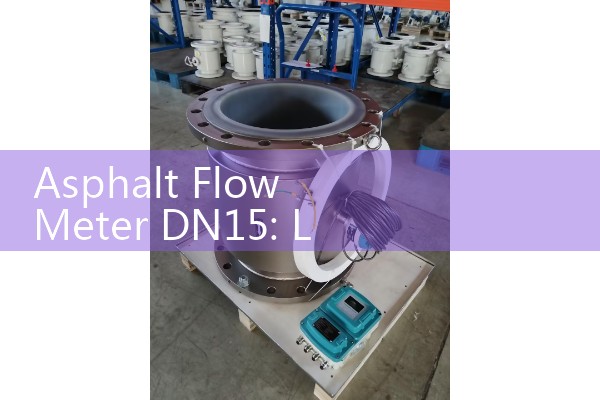
We configure the OGM-DN15-HT specifically for asphalt labs. The measuring unit comes with a 316L stainless steel body, an aluminum bronze gear pair, and an integrated PT100 transmitter. The heating jacket operates with hot oil up to 200 °C. Accuracy stays at ±0.5% of reading from 2 kg/h upward, with repeatability better than 0.03%. The meter is rated PN40 and supplies both a 4-20 mA HART signal and a discrete Namur pulse output. A lab technician can wire the pulse to a SILVER R2000 paperless recorder, log the instantaneous flow, and overlay the batch curve with the mixing torque trace in real time.
A Real Setup from a Modified Asphalt Lab in Vietnam
Last year a customer near Ho Chi Minh City ordered this exact configuration. They produced a crumb rubber modified binder and needed to verify the dosage of aromatic oil inside a 5-litre lab mixer. Their previous method used a calibrated peristaltic pump, but the hot oil swelled the tube, shifting the dose by 3% to 5% over a few hours.
How to Verify Your Formula with Pulse and 4-20 mA Data
Most engineers skip this part, but formula verification needs two signals. The 4-20 mA loop gives you the instantaneous flow rate, which you compare with the mixer amperage draw. The pulse output gives you the totalized mass, which you cross-check with a load cell under the receiving vessel. In practice, you set the batch controller to stop the injection the moment the pulse count hits the target. If you see a consistent lag between the mass totalizer and the load cell reading, you know you have a small air pocket or insufficient backpressure. Adding a spring-loaded check valve right after the meter outlet solves that in one afternoon.
Frequently Asked Questions
Q: Can the OGM-DN15-HT measure polymer-modified bitumen with high SBS content?
Yes, and it is actually the recommended configuration. The aluminum bronze gears and the stainless body handle the high shear forces that come with SBS-laden binders. The heating jacket keeps the viscosity stable during the test, which is critical when SBS concentration exceeds 4%.
Q: What is the maximum continuous temperature the meter can handle?
The standard OGM-DN15-HT works up to 200 °C continuously. If your lab runs PPA or other high-temperature additives up to 230 °C, ask our engineers for the high-temp graphite gasket version.
Q: Do you recommend a strainer before the meter?
Yes, always. A Y-strainer with 60-mesh screen installed directly before the meter inlet prevents gel particles or unmixed polymer crumbs from blocking the gear chamber. In a lab environment, this is the first thing that stops a test run.
Q: Can I get the batch value directly in mass units without an external density meter?
The oval gear meter measures volume. To convert to mass, you need the density at the actual measured temperature. Many labs pair the OGM-DN15 with a small Coriolis meter when they need direct mass output. For formula verification, however, the volume-based pulse is fully sufficient because your recipe is always compared against the same base binder.
Q: What is the typical lead time for a heated DN15 asphalt meter configured for a lab?
A standard OGM-DN15-HT with the heating jacket and PT100 ships within 2 to 3 weeks. We can include the batch controller and a paperless recorder in the same shipment if you prefer a plug-and-run package.
Send us your operating pressure (bar), asphalt temperature (°C), pipe size (DN), and required flow range. Our engineers will propose a heated flow meter setup that fits your lab trial formulation and daily verification routine. You can also explore our oval gear flow meter range for hot-mix applications.