

 Current position > Product detail
『Refrigerant Flow Meter Explosion Proof: Flameproof Housing Rules for Hazardous Gas Zones』Related information(flow rotameter|digital flow meter|balo meter|hydraulic flow meter|volumetric meter|positive displacement meter|pitot tube flow meter|displacement meter|cfm meter|variable area flow meter|inline flow meter|differential pressure flow meter|calibrated flow meter|velocity meter|paddle wheel flow meter|oval gear flow meter|anemometer hvac|multiphase flow meter|doppler flow meter|thorpe tube flowmeter|heat flow meter)
Refrigerant Flow Meter Explosion Proof: Flameproof Housing Rules for Hazardous Gas Zones
Quick Answer:
To measure refrigerant flow safely in a Zone 1 or Zone 2 hazardous area, the flow meter must use a flameproof (Ex d) housing. This enclosure contains any internal explosion and prevents ignition of the surrounding gas. Silver Instruments supplies Coriolis mass flow meters with ATEX and IECEx Ex d certification, covering common refrigerants like R290, R600a, and ammonia.
Why Explosion-Proof Refrigerant Flow Meters Matter
Refrigerant gases are not always safe. Many modern cooling systems use flammable refrigerants. Propane (R290), isobutane (R600a), and R32 are classified as A2L or A3. They can leak into compressor rooms or chiller skids and create an explosive atmosphere. A standard flow meter without proper protection can spark during startup or sensor failure. The result is a serious safety risk for any cold storage, food processing, or chemical plant.
In practice, most engineers skip the risk assessment on old R134a systems because that gas is not flammable. But the shift to low-GWP refrigerants changed the picture completely. Now a chiller manufacturer in Thailand or an ammonia plant in Brazil must follow strict zoning rules. If a flow meter sits inside a Zone 1 or Zone 2 area, the housing must meet flameproof standards. No shortcuts allowed.
Flameproof Housing Rules Under ATEX and IECEx
A flameproof enclosure does not stop an explosion from happening inside. It is built to contain the blast and cool down the escaping gases so they cannot ignite the external cloud. IEC 60079-1 defines the design path. The housing must survive repeated internal explosions without deforming. All flame paths between the cover and the body need a tight gap and long enough length to quench flames.
For refrigerant service, the most common marking sequence is Ex db IIC T6 Gb for Zone 1 or Ex db IIC T5 Gb where process temperatures run higher. The IIC group covers hydrogen and acetylene, but also covers common refrigerant gases like R290 and R32. A T6 temperature class means the outer surface stays below 85 °C, which is safe for gases with low auto-ignition temperatures.
Here is the thing: not all “explosion-proof” meters on a website are certified for gas zones. Some carry dust-only Ex tb certification. In an ammonia compressor room, that dust certification means nothing. A flow meter supplier must provide the full ATEX or IECEx certificate with the gas group clearly listed. Silver Instruments ships every Ex d Coriolis meter with a printed certificate that matches the tag plate serial number. No copies, no generic documents.
How Silver Instruments Builds ATEX-Certified Coriolis Meters for Refrigerant Lines
We design our Coriolis mass flow meters from the sensor tube up for hazardous areas. The meter body is full stainless steel 316L, DN15 to DN150, with a thick-walled flameproof electronics housing. The Ex d enclosure carries an IP66/67 seal, and the internal amplifier is filled with a potting compound so nothing rattles loose under vibration. The output board provides two 4-20 mA HART signals and a Modbus RTU channel. One signal can carry mass flow (kg/h), the other density (kg/m³) or temperature.
Typical refrigerant applications we see on customer sites in Vietnam and
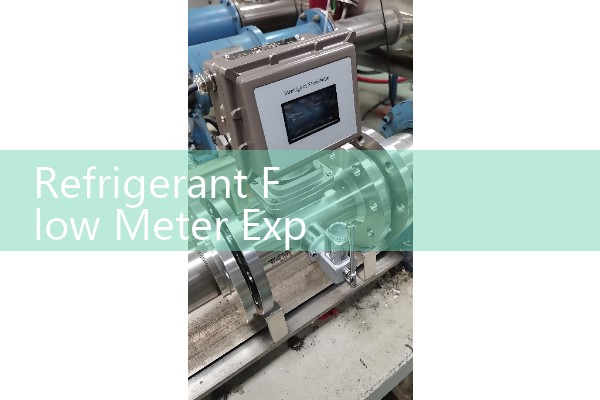
Because the sensor is a bent-tube Coriolis design, it drains freely. Refrigerant oil carryover does not clog the measuring tubes. That is a big advantage over oval gear or turbine meters, which seize up with sticky oil film.
Real-World Example: A Cold Storage Plant in Indonesia
Last year a cold storage operator in Surabaya switched from R22 to R290 in their blast freezers. The pipe gallery where the flow meters sat was reclassified as Zone 2. Their old electromagnetic flow meters had no gas certification. They called us looking for a drop-in replacement. We sent a DN32 Coriolis meter with ATEX Ex db IIC T6 Gb, 316L wetted parts, and two 4-20 mA loops for mass flow and density. The install took one day. The local inspector accepted the certificate because all serial numbers aligned. The plant now tracks refrigerant charge in real time, which also simplifies their leak reporting under the Kigali Amendment.
Frequently Asked Questions
Q: Does a Zone 2 area really need a flameproof flow meter or can I use non-arcing Ex nA?
A: Under IEC 60079-14, a Zone 2 area can accept Ex nA if the equipment produces no arcs or hot surfaces during normal operation. But a Coriolis meter contains an energized driver coil and an internal power supply. It is usually safer to specify Ex d or Ex eb. We recommend Ex d because the wiring compartment remains simple and maintenance teams understand it.
Q: Which refrigerants require IIC gas group?
A: R290, R600a, and hydrogen-containing blends fall into IIC because of low minimum ignition energy. R32 and R1234yf are typically IIB. However, most clients choose IIC to cover future gas changes. The cost difference between IIB and IIC in a small DN25 meter is tiny.
Q: Can I use a magnetic flow meter for refrigerant?
A: No. Refrigerants are non-conductive liquids or two-phase mixtures. Magnetic flow meters need a minimum conductivity of 5 µS/cm, which you will never reach with R134a or R410A. A Coriolis meter is the right choice because it measures mass directly regardless of conductivity.
Q: What standards apply for ammonia (R717) gas zones?
A: Ammonia is group IIB, temperature class T1 under ATEX. Many ammonia plants use Ex d IIB T4 meters as a safe over-spec. Silver Instruments supplies ammonia-ready meters with Hastelloy C22 wetted parts and full traceability to EN 378 pressure equipment rules.
Q: How do I select the correct flow range for a refrigerant metering skid?
A: Send us your minimum and maximum mass flow (kg/h), pipe size (DN), operating pressure (bar), and gas type. Our engineers select a tube geometry that keeps the pressure drop under 0.3 bar and the flow velocity above the sensor cut-off. We reply with a datasheet within one working day.
Contact Silver Instruments for a certified flameproof flow meter:
Email: [email protected]
Tel: +86-25-68650347
Whatsapp: +86-25-52155837
WeChat: +86 15365082610
Website: https://flow-meter.com.au